Want to learn how to play Call of Cthulhu 7th edition at the table? This seven-step guide covers what players and Keepers need for a first session: understand the investigation-and-horror premise, gather rules, sheets and dice, create investigators, learn the core percentile system, set up the game, play, and close the adventure. Thorsteinn's original stories show how those steps feel in play.
I had barely been playing for a couple of years when I was introduced to Call of Cthulhu, the roleplaying game. Before that, I had mostly played AD&D, Star Wars, and Toons, and Call of Cthulhu had a distinct and very different tone. The cosmic horror, the Cthulhu Mythos, and the slower narrative pace were completely new to me, but the game got me hooked right from the start.
I remember staying up late after that first session, reading vigorously through the rulebook, especially the Call of Cthulhu short story by H.P. Lovecraft, found at the start of the rulebook. Even when I open this book today, just the smell of the paper takes me back to my small bedroom and sends shivers down my spine as I soldiered through the text with a massive dictionary by my side.
You absolutely do not need to read the entire rule book and Lovecraft’s work to play Call of Cthulhu. And of course, the best way to learn the game is to find someone to teach it to you and enjoy it with your friends. But you can also find a few solo adventures, which you can enjoy on your own and learn the game at the same time.
1. Get to Know the Game
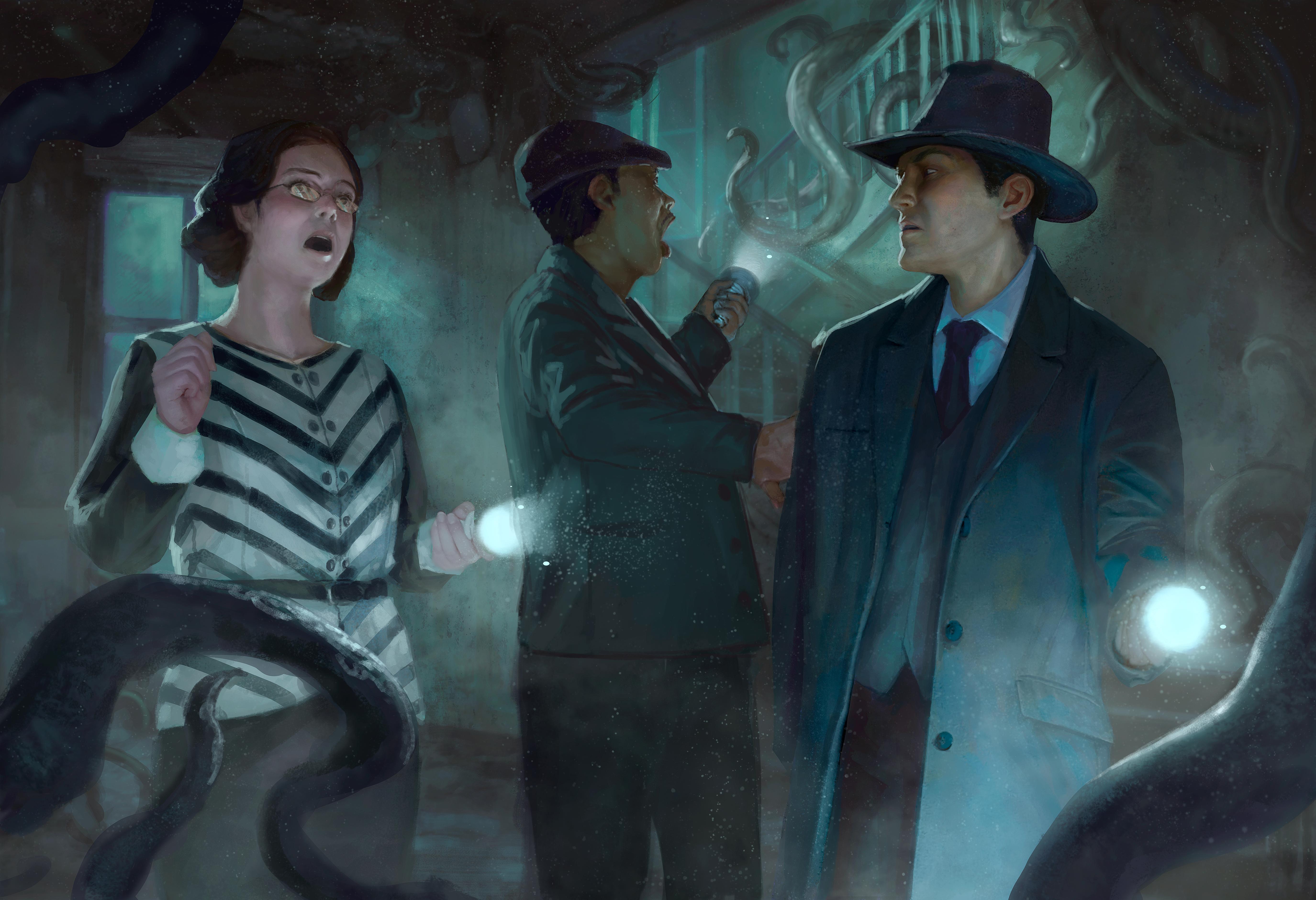
First things first, understand what Call of Cthulhu is all about. The game is typically set in the 1920s, but you can play in different periods, from ancient to modern times. Players take on the roles of investigators who delve into dark secrets and face otherworldly horrors. Your main goals are to survive and keep your sanity intact, as your characters will encounter things that challenge their understanding of reality.
Before my first Call of Cthulhu session, the game master introduced us to a few new concepts. All characters have not only hit points, but also sanity points which represent our characters’ mental health. The heroic antics of other games were somewhat dismissed altogether, since facing monsters could chip away at our characters’ sanity, even leaving them insane.
“Also,” our game master added, “this is a game of investigation. Think of this as Film Noir, instead of a high-action fantasy flick.” Now, this part set some of the players in my group a bit back, since we were accustomed to playing fast-paced games, laughing and shouting, more often than not getting into so much trouble by being foolish. “This a game where terrible monsters, ancient gods, and cosmic entities rule the universe, and whatever evil plans they have, you must discover and stop…before it's too late!”
That last part had us all on our toes, fumbling for pencils and characters. Saving the world from terrible monsters was our modus operandi!
Susan, Jane, and Paul want to try out a new roleplaying game and have discovered Call of Cthulhu through Quest Portal’s guides. After reading a few blog posts and reviews, they decide to try the game. Each reads a bit about the setting, and Susan, being an avid reader, finds a copy of some of H.P. Lovecraft’s stories and reads them, telling the other two more about the setting and the universe the game is set in.
2. Gather Your Supplies
Start with Chaosium's official 7th-edition rules. The free Quick-Start Rules introduce the basic system with ready-to-play investigators and The Haunting. The Starter Set or Keeper Rulebook takes the game further.
For paper play, download Chaosium's official character sheets. For online play, Quest Portal has a Call of Cthulhu 7th Edition sheet, and its Free plan currently includes unlimited characters and campaigns.
You will also need roleplaying dice: percentile dice (usually two ten-sided dice), plus a D4, D6, D8, and D20. One set is enough for a group, or you can use a dice-rolling app.
A published scenario is useful when everyone is new. Chaosium's free Quick-Start Rules include the introductory adventure The Haunting. For another starting point, read Quest Portal's guide to The Lightless Beacon.
That first night I played Call of Cthulhu, we only had one copy of the rulebook, and the internet was really not something where you could look up rules or ask an AI for clarification. But we had character sheets printed out, pencils, dice, and more snacks and sodas that would be considered enough for a whole football team. We had everything we needed for a good night filled with monsters and roleplaying games.
After deciding she wants to be the Keeper, Susan gets a copy of the rulebook and prints out a couple of character sheets. After finding time with Jane and Paul, she invites them over and, after a short chat and catching up, starts to get ready for the first session.
3. Create Your Characters
The first Call of Cthulhu character I created was an aspiring writer called Paul Deschamel and I still have the character sheet. I played the character in several scenarios until he went irrevocably insane after stumbling upon a Cthulhu monster playing a flute inside a lighthouse. I never said that these scenarios were very serious or masterfully written! I have to admit that although retiring Paul was a bit sad, that ending of the scenario had us all laughing so hard.
Creating a 7th-edition investigator includes determining characteristics, choosing an occupation, allocating occupation and personal-interest skill points, and recording a backstory. Use the full rules for the available methods and limits.
Follow our step-by-step guide to creating a Call of Cthulhu investigator.
After a short chat, Paul and Jane start creating their first investigators, with Susan helping them look up rules and guides on character creation. After rolling for attributes, Paul decides to play a German Private Investigator called Rutger Bauer, but Jane creates a former athlete turned journalist, Belle de’Ville. Once their investigators are ready, they are all set to start playing the scenario.
4. Learn the Rules
When I played my first Call of Cthulhu game, I didn’t know much about the basic mechanics. The Game Master that night simply stated that we would pick them up as we played since they are not all that difficult to grasp.
Editor's note: Learning at the table is a good start. Chaosium's free Quick-Start Rules cover the basic system and include a scenario with ready-to-play investigators. For more complete rules and support, continue with the Starter Set or Keeper Rulebook.
Most skill and characteristic checks use percentile dice. A Regular success is a roll equal to or below the relevant value; a Hard success is equal to or below half that value, and an Extreme success is equal to or below one-fifth. Combat, Luck, Sanity, damage, and opposed rolls add their own procedures, so the core rule is a starting point rather than a rule for every roll.
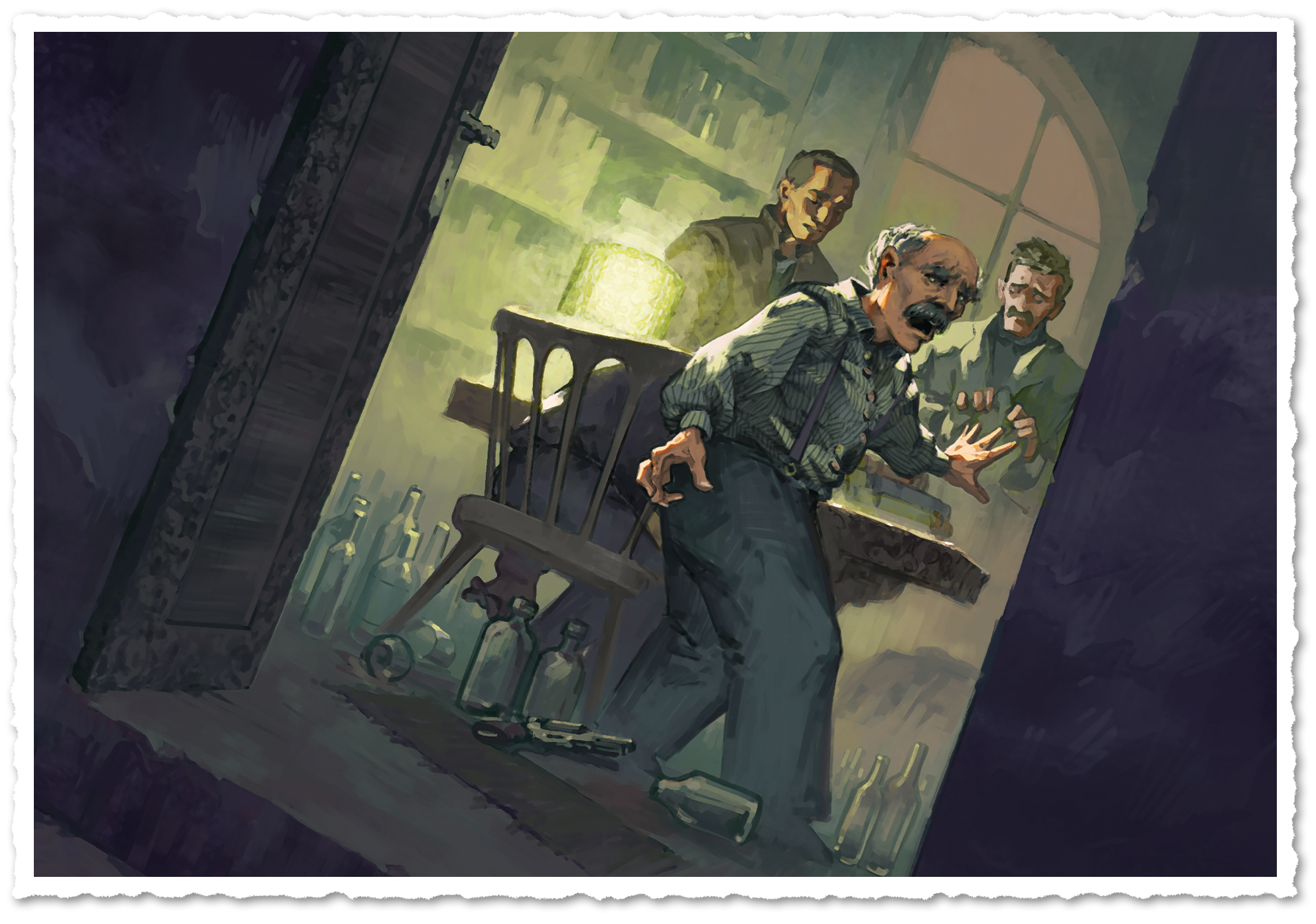
A Luck roll asks whether circumstances outside an investigator's control go their way: roll equal to or below the investigator's current Luck value. A failed skill roll may sometimes be pushed when the player justifies a new effort, but failing the second roll allows a serious consequence. Consult the full rules for other uses of Luck and the limits on pushed rolls.
For my group, this was easy to grasp. We quickly understood the basic mechanics, and before long, we were knee-deep in trouble, slowly discovering that not all was well in Innsmouth. In fact, far from it!
Susan starts the game by introducing Paul and Jane to the first scene. Their investigators find themselves aboard a sinking ship and must row to safety. Paul and Jane describe their investigators and their actions. Susan calls for a Pilot (Boat) check. Neither character has many skill points assigned to this particular skill. Paul rolls 83, but Jane rolls 07 and decides to spend a few Luck Points to succeed on the check. Fortunately, the investigators managed to cut loose a rowboat, get in, and row from the sinking ship.
5. Set Up the Game
One of the most interesting and fun roles in roleplaying games is the role of the game master. In Call of Cthulhu this player is called the Keeper. It is their role to set up the game environment, adjudicate the rules, lead the narrative and set the mood.
I was so fortunate that the Keeper in those first Call of Cthulhu games I played was experienced and knew the game inside out. Or at least it felt like that, but come to think of it, how well could a 16-year-old Icelandic teenager have known all the literature in this game?
Anyway, he did a marvelous job leading us through many investigations and setting the mood. As soon as he started describing the scenes, I was instantly transported back to the roaring 20s, becoming the aspiring writer Paul Deschamel.
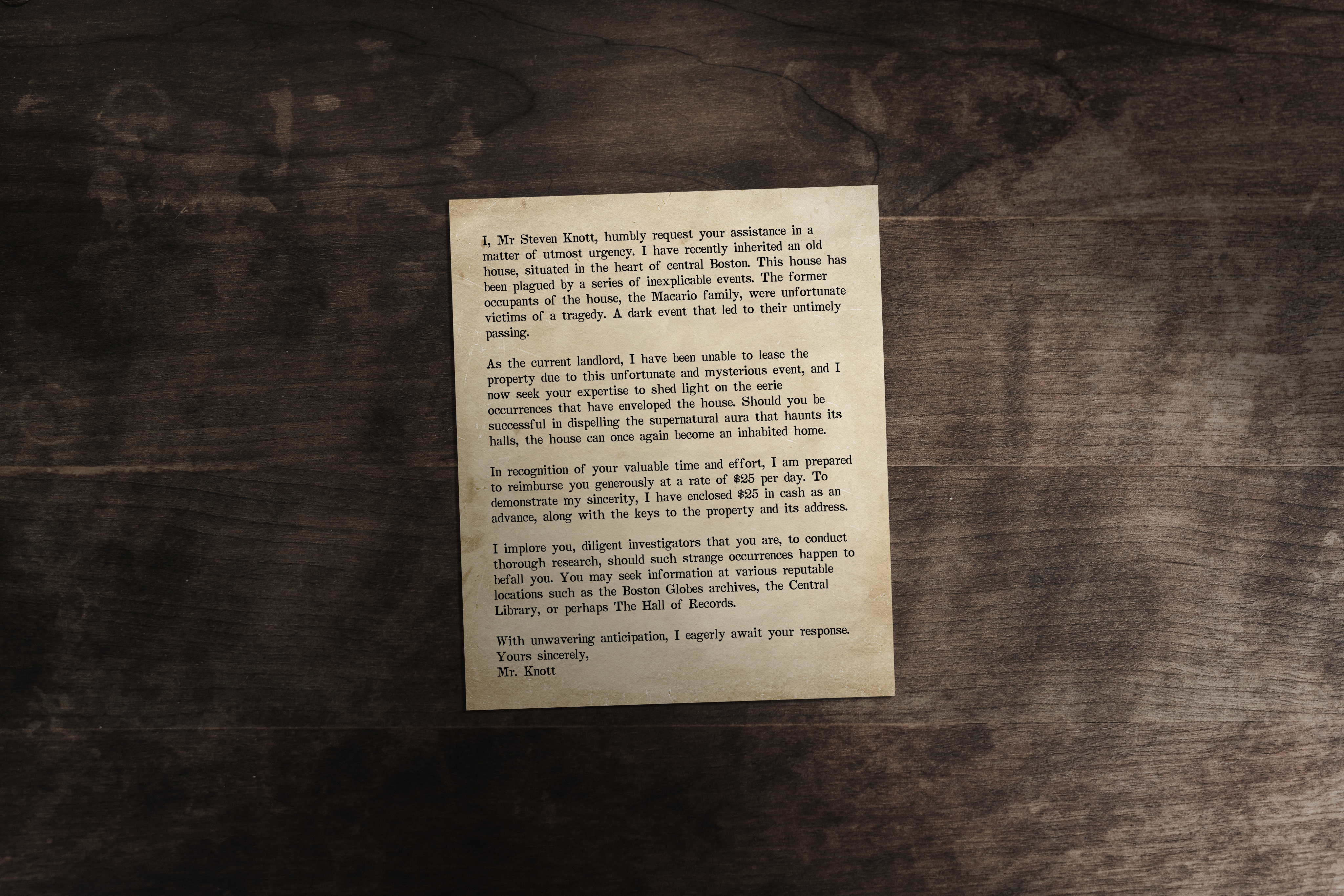
This was the first time I saw a handout that wasn’t a map. He had photocopied a page from the scenario book, showing a withered page from an old manuscript. We poured over it and tried to make any meaning from it, and I remember how intriguing it was to have something so simple enriching the game so much. The lights were dimmed, and an ominous, creepy soundtrack emanated from the speakers. It was really easy to get into character and see in my mind’s eye everything that transpired in the narrative.
Many years later, when running a Call of Cthulhu game at a small convention here in Iceland, I fully understood and grasped the effect small props and details like that can have in a roleplaying game. The investigators were stranded in remote areas of Greenland with an Inuit tribe. Every now and then, I drummed my fingers and hand gently in the gaming table. One player picked it up and asked, “Do we hear that drumming? What is it?” I answered: “Yes, you do,” but left the later question unanswered.
As the narrative progressed, the drumming got a bit louder and more chaotic. One player in particular was really tense, and every time I started, I could see them get nervous. At the climax of the narrative, the investigators discovered a secret cave where the Inuit, which was, in fact, a sect worshiping the Great Cthulhu, were playing drums, shrieking, howling, and preparing to sacrifice the investigators. Every time I meet that tense player, he tells me that when he hears chaotic and wild drumming, he experiences this scene all over again, to which he adds is one of his greatest and most memorable roleplaying experiences.
Paul and Jane’s investigators are in trouble. The ship has sunk, and they must row for their lives in the middle of the night. Susan describes the scene vividly. The lights are dimmed, and she finds a stormy sea ambiance online, which she plays using her computer. Suddenly, the investigators see a flicker of light ahead—a lone lighthouse on an island. They are saved… or so they think.
6. Play the Game
In most role-playing games, the player characters do not need to do much to become involved in the action. In Call of Cthulhu, the pace is a bit different since the investigators lead the narrative, asking questions, pondering clues, and interacting with non-player characters.
As a player, this allows you to immerse yourself in your character and make decisions based on their personality and knowledge. Most keepers I’ve known encourage roleplaying and players to interact with one another, discuss recent discoveries, and try to make sense of the clues and information they have found so far.
The tension comes from the sense of mystery and suspense; you might think that the dead artist simply took their own life, but as you begin to read their diary, you discover that they had strange dreams of sunken cities and horrible alien monstrosities towering above, which coincides with the experience of your late uncle…
Editor's Tip: Work with your Keeper to make the genre of game you're playing - because it's easy to let a game become silly (which is of course fun!), but the key to any horror game is that you as a player buy into the concept that this is horror and go with it, instead of subverting it.
The more you let yourself go and indulge in your character, the more fun and vivid the game becomes.
After landing on the island, the investigators discover a small cottage by the lighthouse. Thinking they are safe, they decide to start by checking out the cottage but no one is there. However, they find a peculiar notebook in one of the rooms, filled with annotations about strange occurrences on the island. “What do you think this means?” Paul asks. Jane, after reading through the notes, answers: “I’m not sure, but I have a bad feeling about this.”
7. Wrap Up the Adventure
Every adventure has an end, whether it’s a triumphant resolution, a narrow escape, or a tragic demise. The Keeper should bring the story to a satisfying conclusion and provide closure for the players.
Sometimes things turn out badly, as it did for my writer. After all, fighting cosmic horror and monstrous entities with nothing but a revolver is way harder than it sounds, and frankly, it doesn’t even sound easy!
You might, however, escape from these ordeals alive, from time to time. But the damage is still done, your character might have not gone insane but their knowledge of the world is shattered. Now, they know something evil, something terrifying, can enter our world and make us all lose our minds.
Despite all the gloom and despair, Call of Cthulhu is a great and fun game to play. As a Keeper, it is your role to end the session or scenario in a good way, discuss what happened, and allow the players to share their thoughts and provide feedback. Perhaps it’s time to roll for experience if this is an ongoing narrative. At least, before you all go home, plan the next adventure and make the necessary preparations.
After fighting terrifying monstrous fish-people, Paul and Jane’s investigators make it off the island. Both players lean back in their seats as Susan describes how the coastguard comes with the morning sun and helps them return safely to the mainland. Once the narrative fades to black, Susan asks how they liked the game. Both Paul and Jane are happy they got out safely and are eager to return to their roles as investigators, after all they have a few strange gold coins in their pockets that need further investigation.
By following these steps, you’ll be well on your way to running or playing an exciting game of Call of Cthulhu. Embrace the mystery, the horror, and the thrill of uncovering the unknown. Most importantly, have fun and remember that the memories made with friends are worth more than all the gold in the world.
Jump to section

